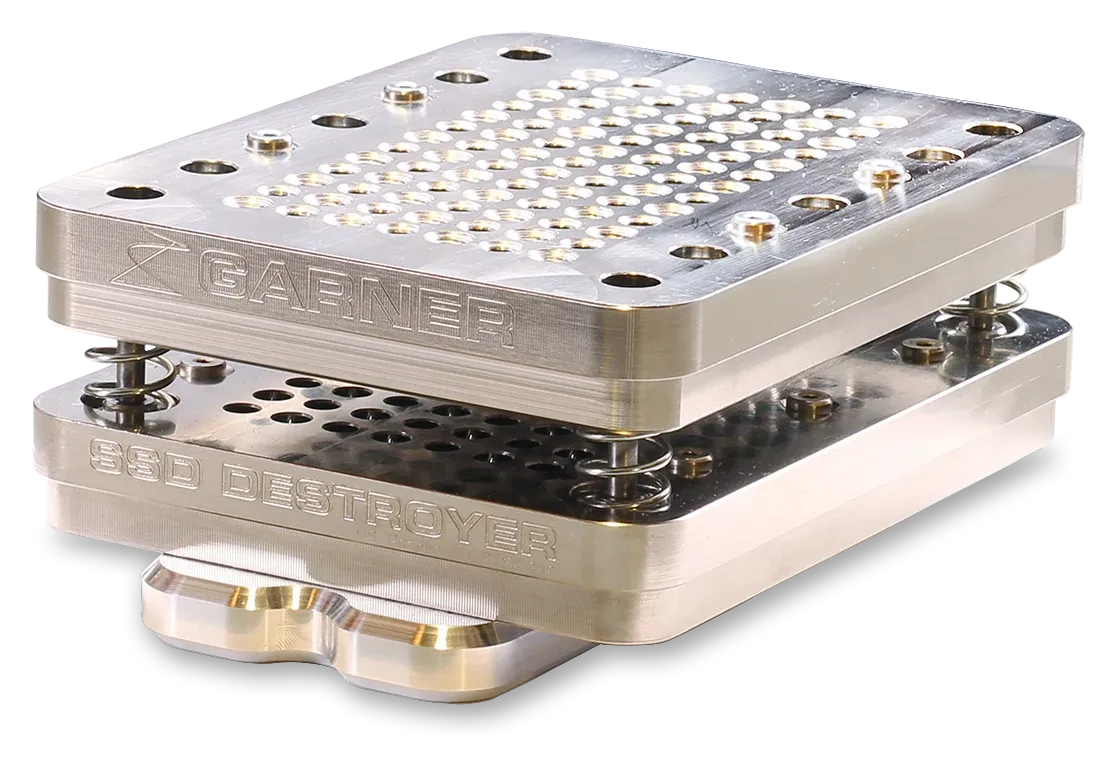
Garner SSD-1E
Insert with 90 spikes for the PD-5E. Punctures the memory chips of SSDs, USB sticks and phones.
- Use
- insert for PD-5E
- Capacity
- 180–720 pieces per hour
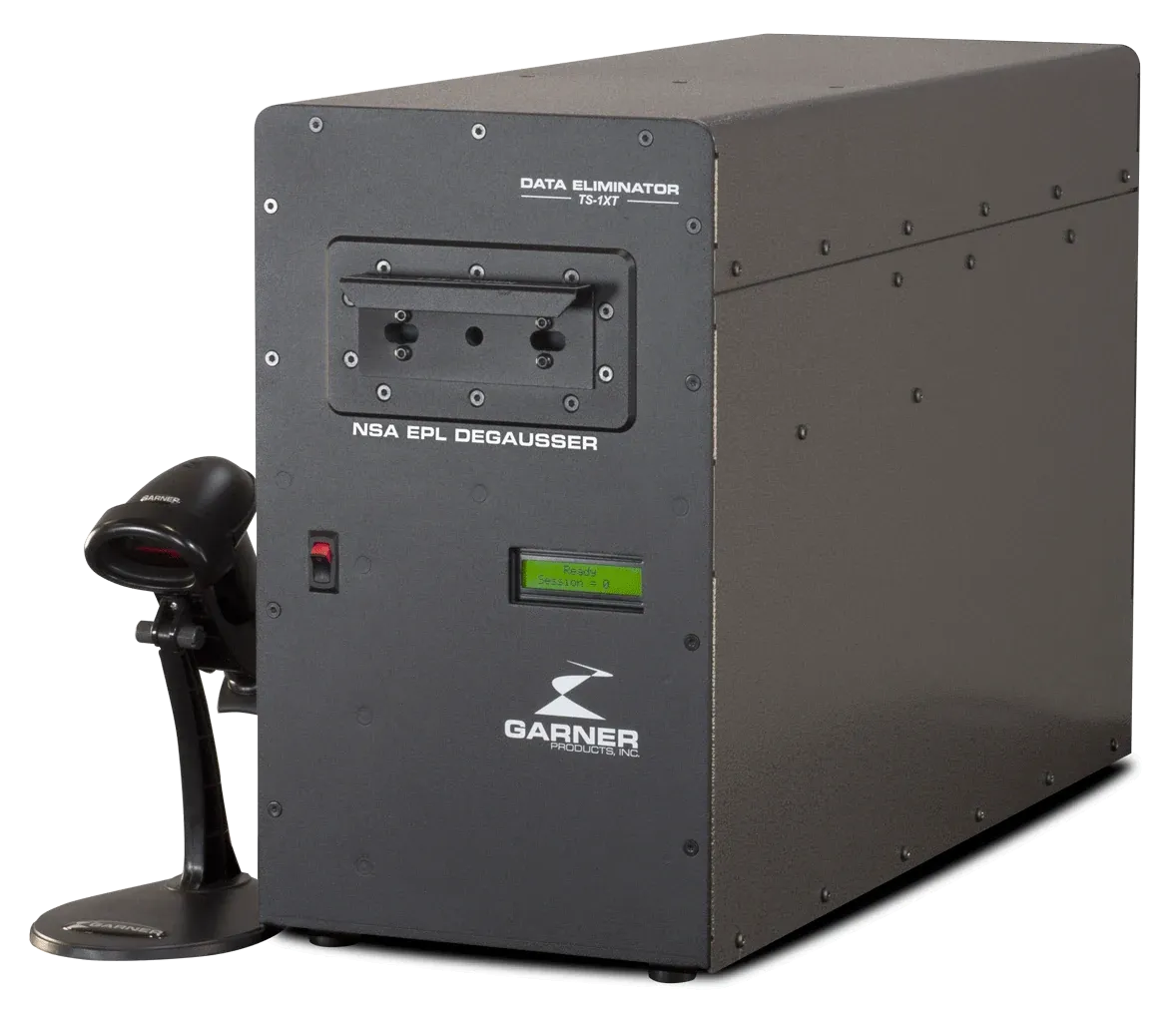 DegaussersErase magnetic media with a strong magnetic field.5 models
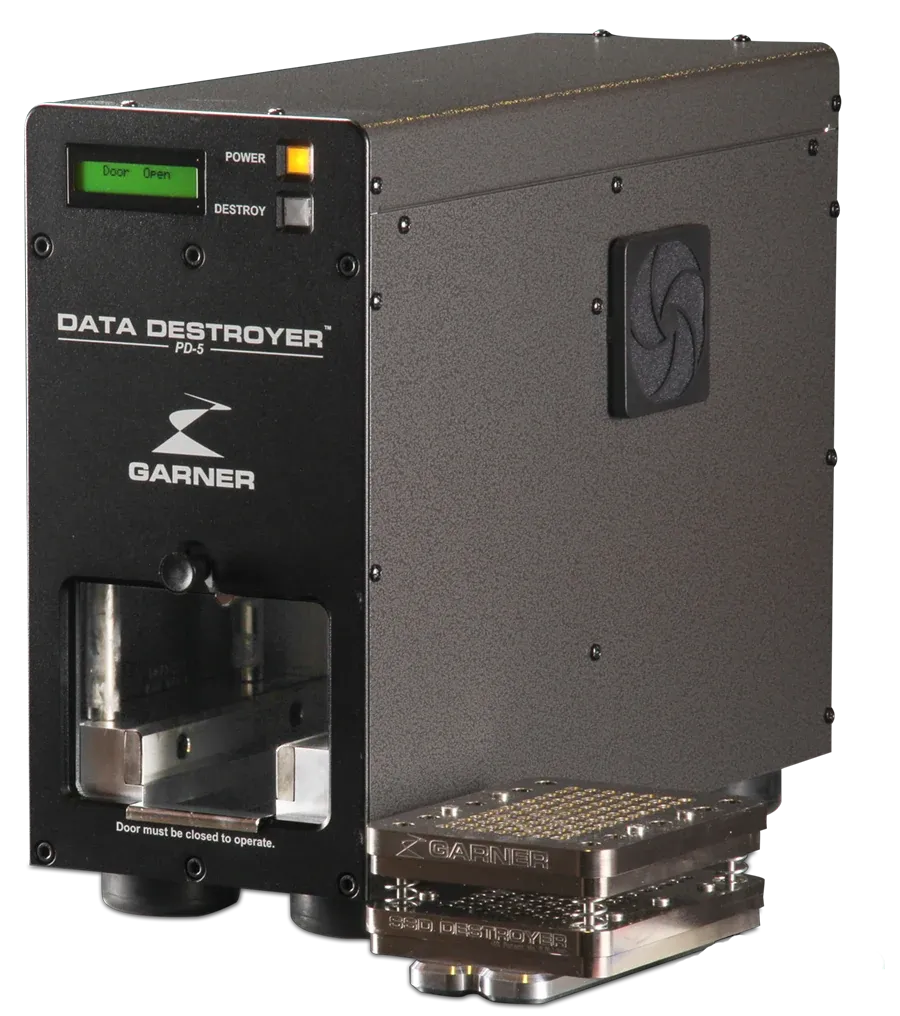 DestroyersPhysically deform hard drives and SSDs.2 models
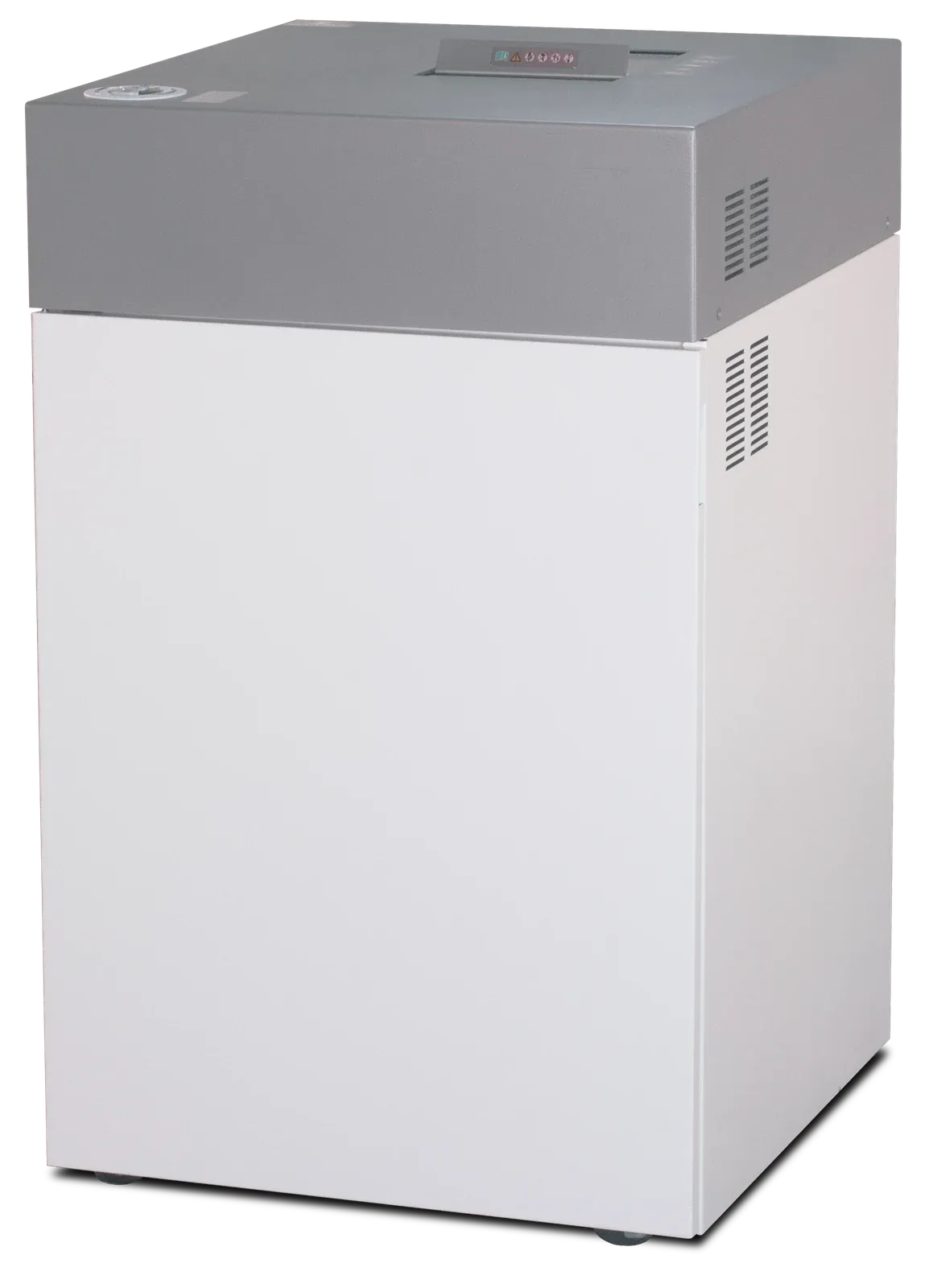 ShreddersShred flash memory, SSDs and small media.1 model
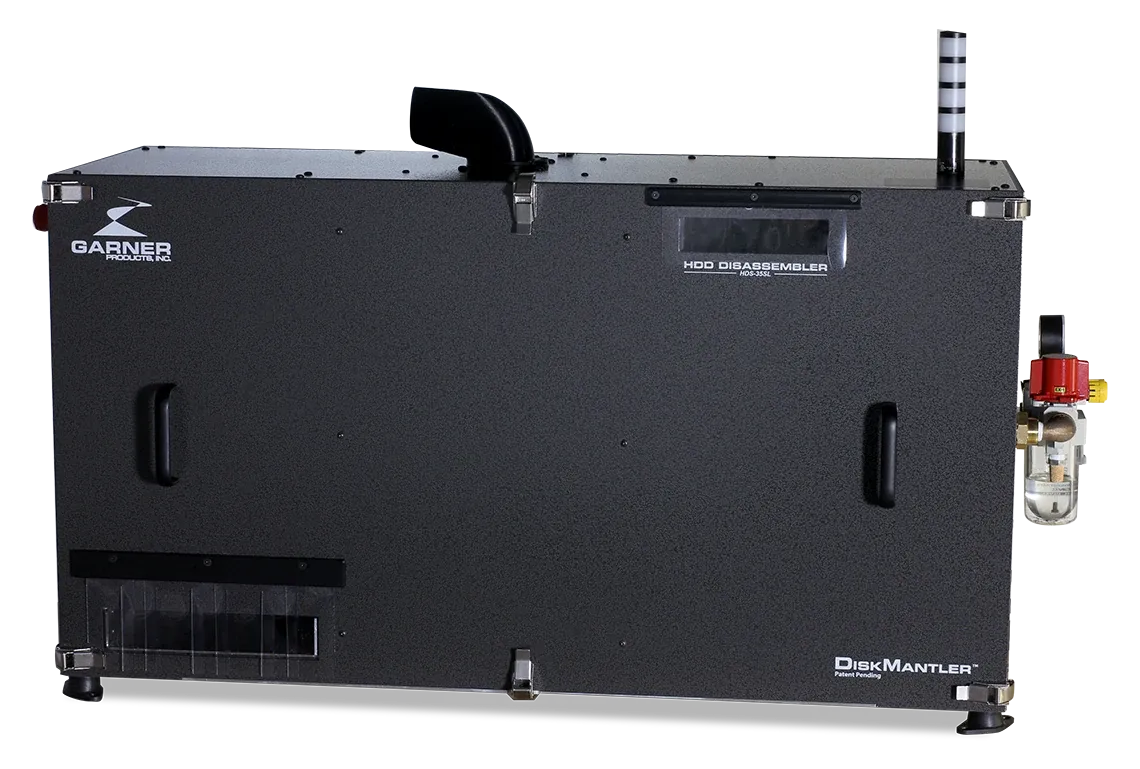 DiskMantlersDismantle hard drives into separate components.3 models
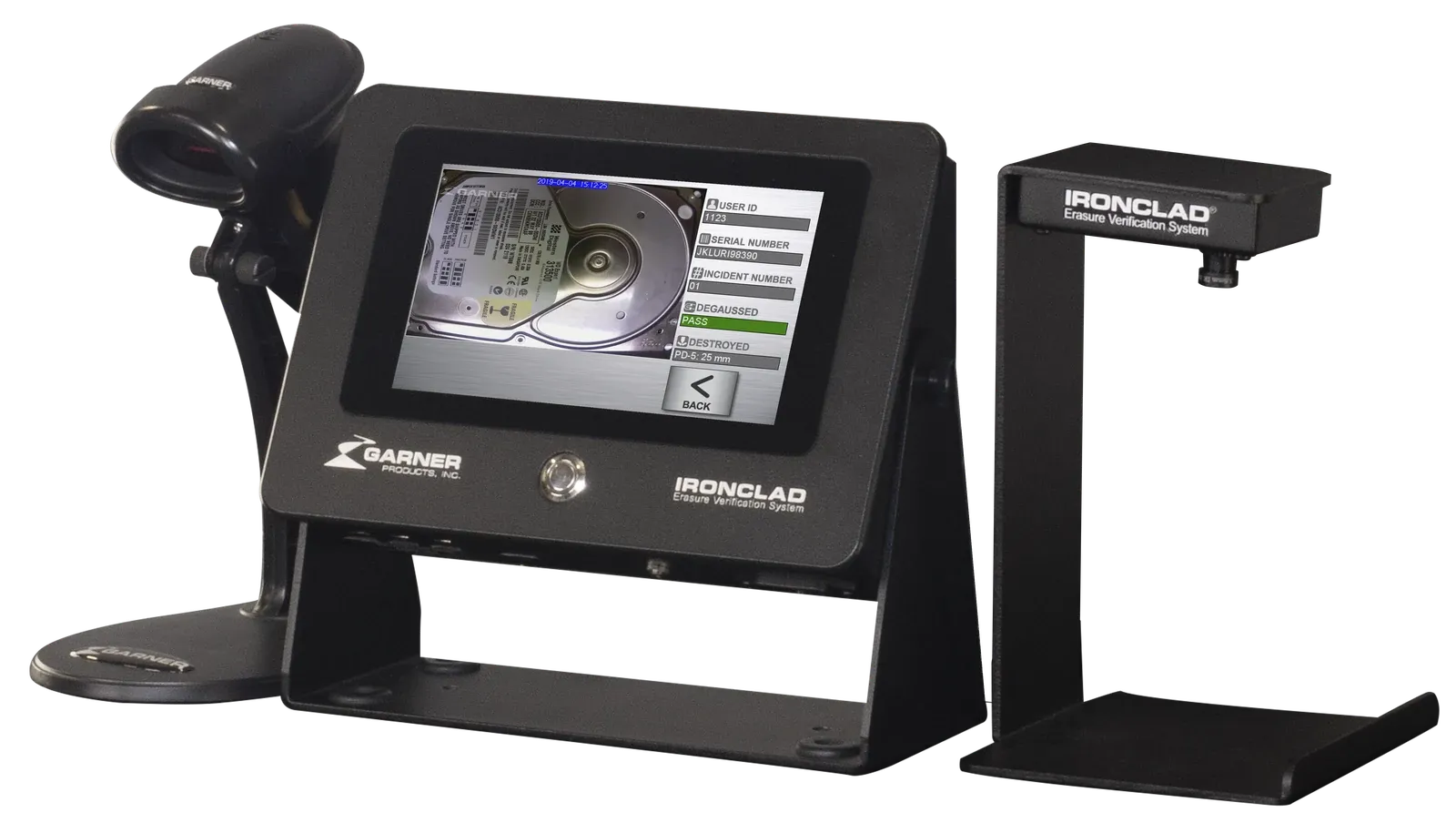 VerificationRecord and prove every erased or destroyed drive.1 model
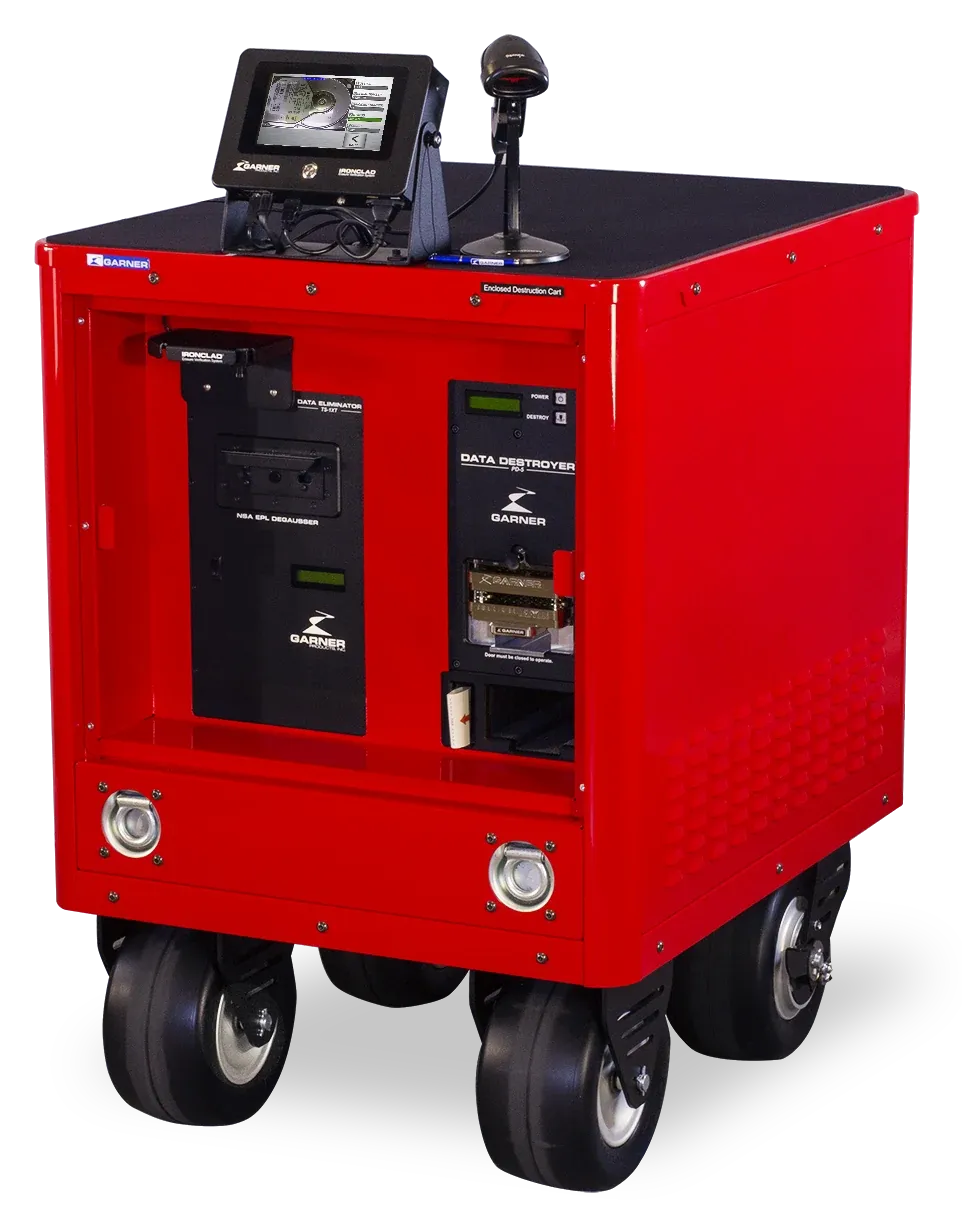 Packages and accessoriesCombined systems, carts, cases and workstations.6 models
Published 15 October 2026
A degausser has no effect on SSDs and flash memory. Why that is, which physical destruction methods do work, and how to choose between them.
Many organisations already own a degausser for their hard drives and tapes. It is tempting to put SSDs through the same machine. That does not work. For SSD destruction you need a different method, because an SSD stores its data in a completely different way.
A degausser erases data with a strong magnetic field. That works on hard drives and tapes, because they store data magnetically.
SSDs, USB sticks and the storage in phones work differently. They store data in memory chips, not magnetically. A magnetic field leaves those chips untouched. After a pass through a degausser, the data on an SSD is still there.
The consequence is simple: the chips themselves must be destroyed. NIST SP 800-88 Rev. 2 describes destroy as making media unusable and recovery infeasible, for example by disintegration, pulverisation, shredding or melting.
Garner offers two machines for physical SSD destruction. They work differently and lead to a different result.
The SSD-1E is an insert for the PD-5E destroyer. You place it in the destruction chamber, put the media in, and the press drives 90 nickel-plated spikes through the memory chips.
The chamber takes one standard SSD, one phone or one SSHD controller board at a time. Smaller items such as USB sticks go in the supplied transport sleeves. Depending on the size of the media, Garner gives a throughput of 180 to 720 pieces per hour.
This route suits organisations that already have a PD-5E for hard drives, or that want one machine for hard drives and SSDs. Note: the SSD-1E perforates the chips; it does not reduce them to a fixed particle size.
The FLASHPRO-E is a shredder for SSDs, USB sticks, phones and CDs/DVDs. Cutting rollers reduce the media to particles of 4 × 15 mm, which fall into a 25-litre collection bin. Garner gives a throughput of up to 500 SSDs per hour.
The EMEA version runs on 230 or 240 V and produces 65 dB while shredding. It can therefore stand in a workshop or a separate room in an office building.
The deciding question is whether your standard specifies a particle size.
ISO/IEC 21964 (formerly DIN 66399) groups SSDs, USB sticks and chip cards under material category E for electronic media. The protection class of your information leads to a security level, and that level specifies how small the particles must be. Garner states that the FLASHPRO-E, with particles of 4 × 15 mm, meets security level E-3. Which level you need follows from your own risk assessment or from your customer’s requirements.
If a particle size is required, a shredder is the route. If it is not, perforating with the SSD-1E can be enough, depending on your policy.
For classified media, other rules apply. Under NSA/CSS Policy Manual 9-12, SSDs must be disintegrated to 2 mm or less with a device from the NSA/CSS list for solid-state devices. No Garner product is on that list.
A few practical points apply to both machines:
Many organisations retire hard drives and SSDs together. Then you need two methods side by side. Garner’s degauss-and-destroy packages combine a degausser with the PD-5E, with or without the SSD-1E insert. The DDR workstation packages put the same machines on one table with lockable storage.
NIST also asks you to verify and record the result. IRONCLAD records each item with a photo. With the FLASHPRO-E, it photographs the media before shredding and adds it to the certificate of destruction. With the PD-5E, it records the crush depth and a photo.
The right choice depends on your media, your volumes and the standard you need to demonstrate. Ask for personal advice or request a quotation directly.
Insert with 90 spikes for the PD-5E. Punctures the memory chips of SSDs, USB sticks and phones.
Shreds SSDs, USB sticks, phones and optical discs into particles of 4 × 15 mm.
from €16,950 excl. VAT
Photo, pass/fail result and certificate per drive. For Garner degaussers, destroyers and the FLASHPRO, or stand-alone.