Garner FLASHPRO-E
Shreds SSDs, USB sticks, phones and optical discs into particles of 4 × 15 mm.
- Particles
- 4 × 15 mm
- Capacity
- 500 SSDs per hour
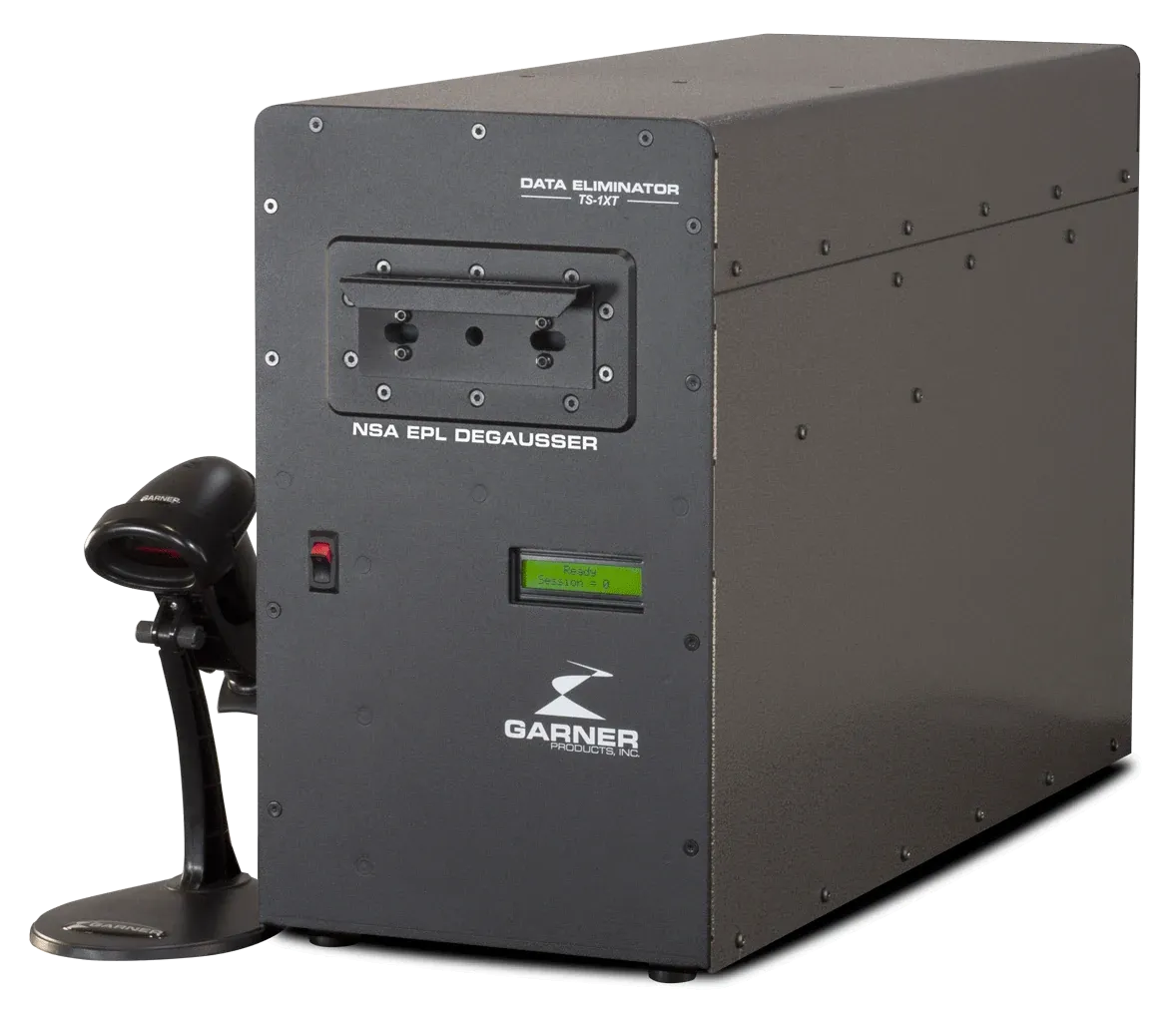 DegaussersErase magnetic media with a strong magnetic field.5 models
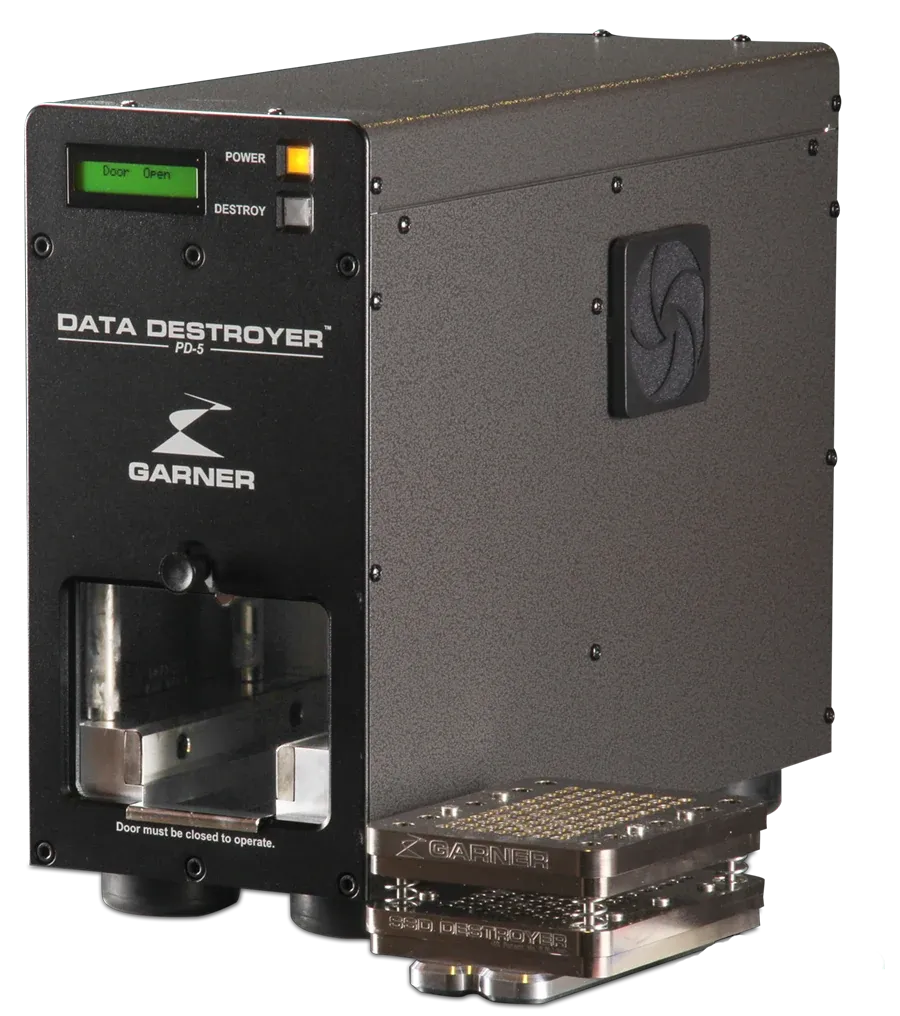 DestroyersPhysically deform hard drives and SSDs.2 models
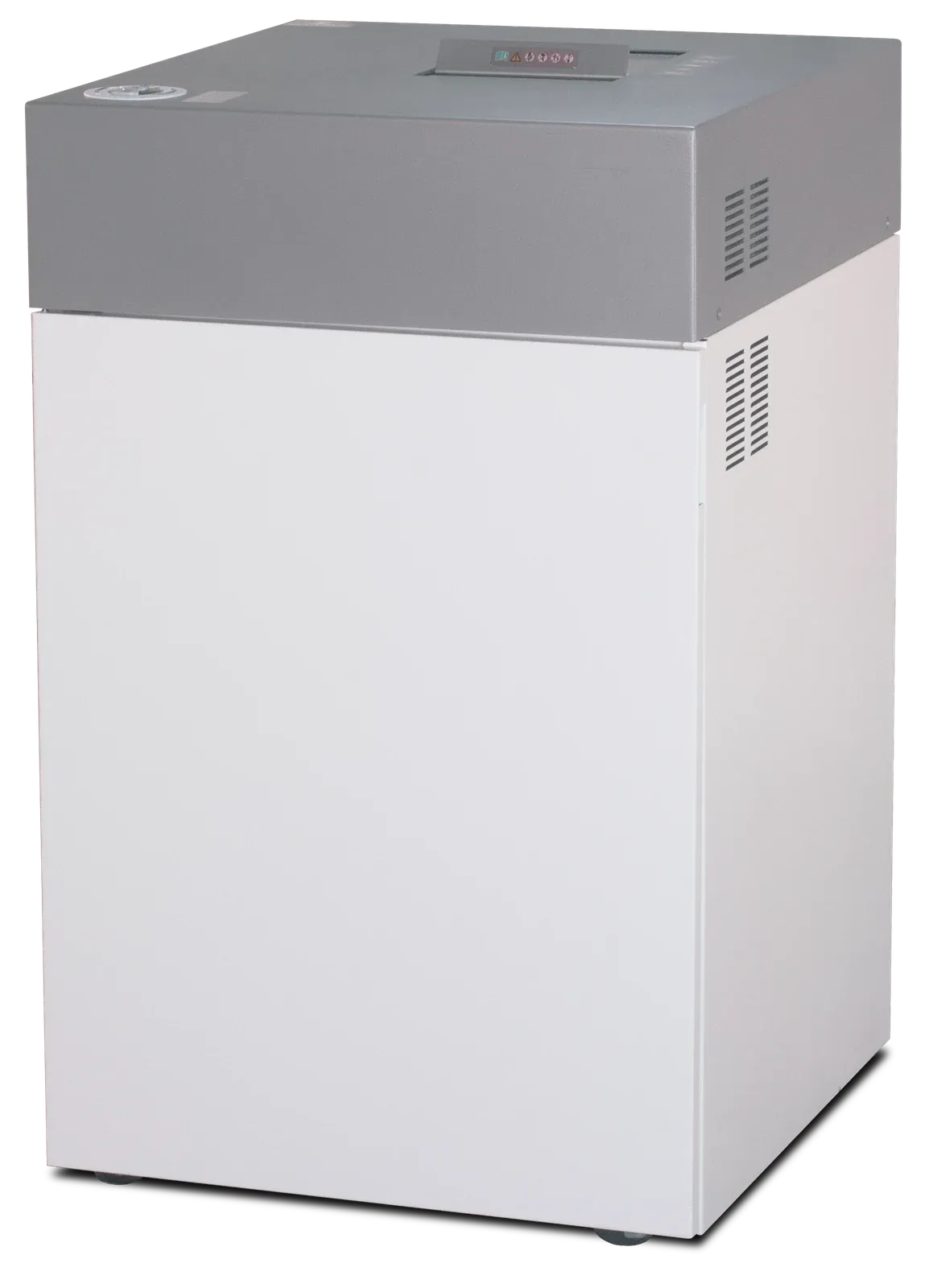 ShreddersShred flash memory, SSDs and small media.1 model
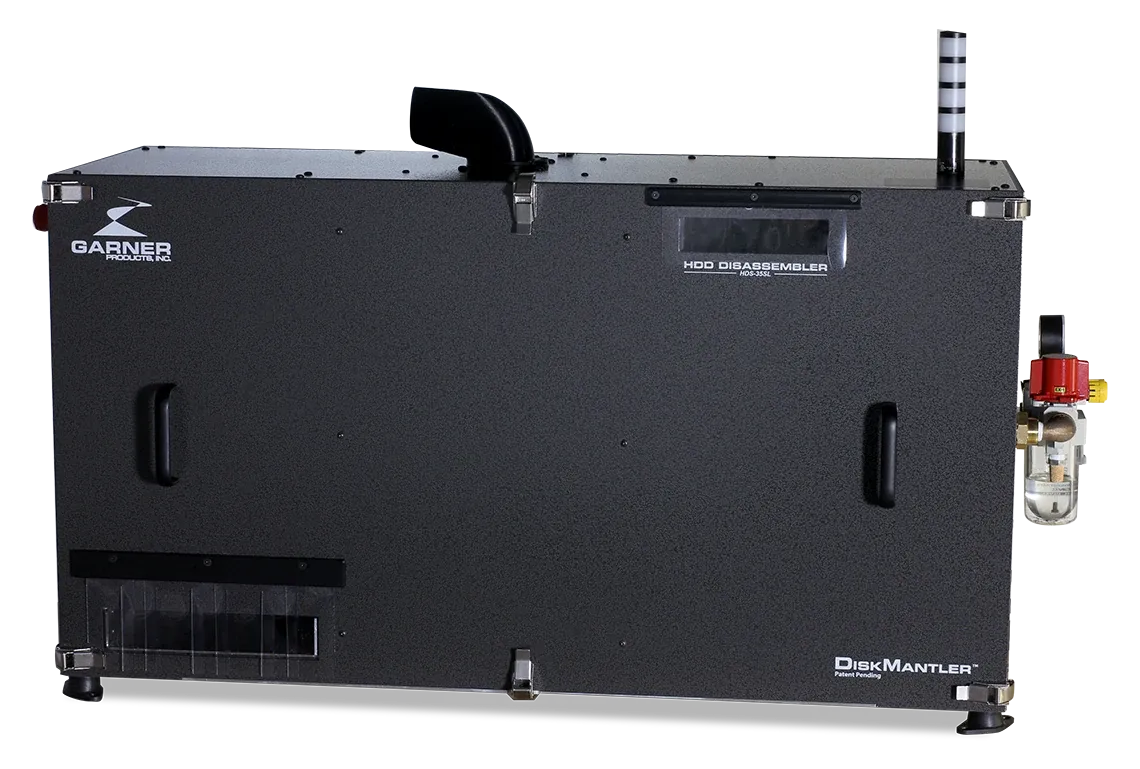 DiskMantlersDismantle hard drives into separate components.3 models
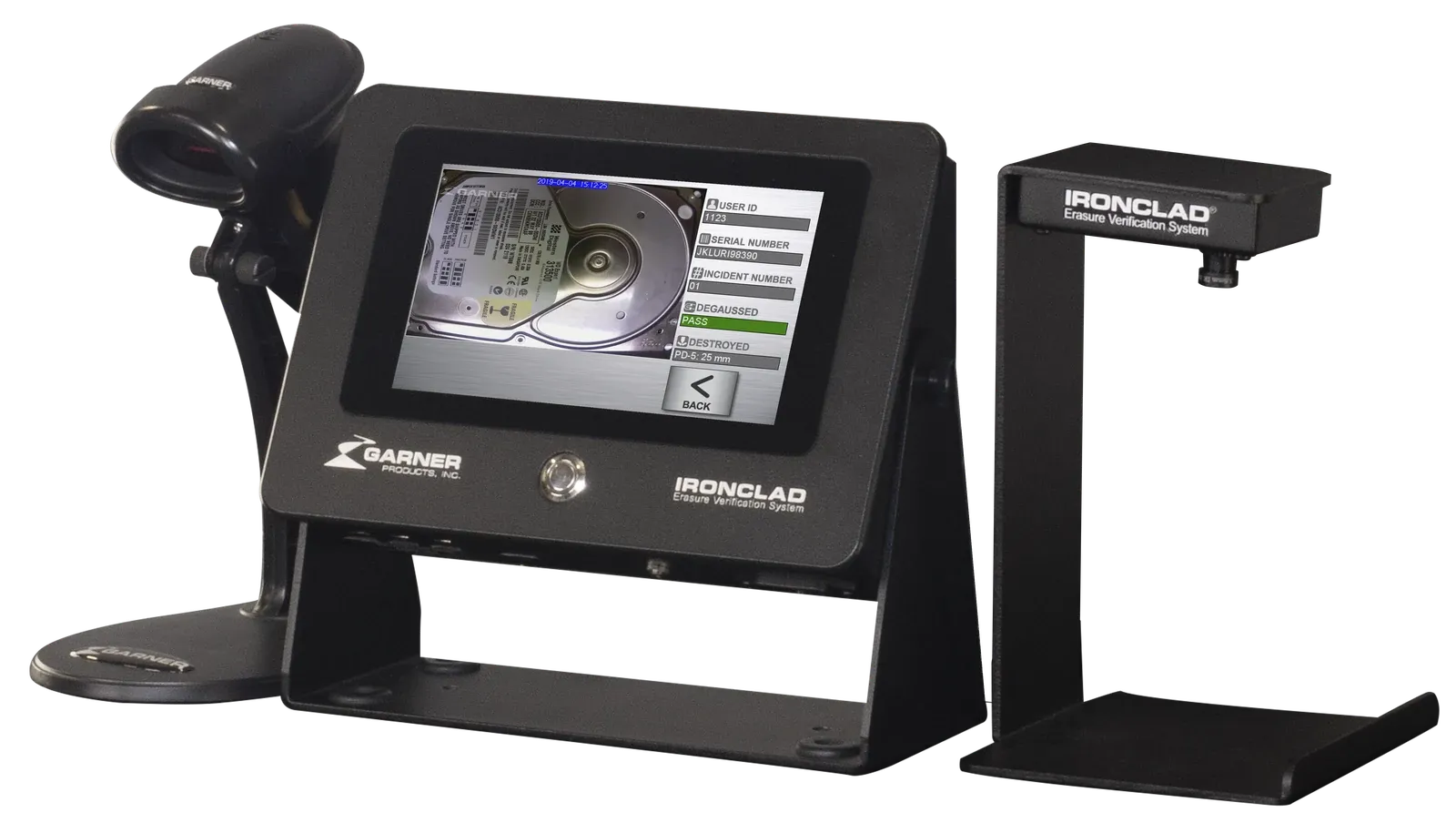 VerificationRecord and prove every erased or destroyed drive.1 model
Standard · international
The international standard for the destruction of data carriers. It succeeded the German DIN 66399 and is used across Europe to specify how far media must be destroyed.
ISO/IEC 21964 (2018) consists of three parts:
The standard replaces DIN 66399 in this area; DIN recommends ISO/IEC 21964-1 instead of the withdrawn DIN 66399-1.
The standard works in three steps. First you determine the protection class (1 to 3) of the information, from normal to very high protection need. That class leads to a minimum security level (1 to 7). The level then specifies, per material category, how small the particles must be:
| Category | Media |
|---|---|
| P | Paper and printed matter |
| F | Film, microfilm |
| O | Optical media such as CDs and DVDs |
| T | Magnetic media such as tapes and diskettes |
| H | Hard drives with magnetic platters |
| E | Electronic media such as SSDs, USB sticks and chip cards |
So a level E-3 means something different from H-3 or P-3: the required result depends on how data is stored on the medium.
For electronic media, a shredder with a defined particle size is the usual route. According to Garner, the FLASHPRO-E with particles of 4 × 15 mm meets security level E-3. For hard drives, the H levels describe the degree of deformation or particle size; a destroyer deforms the drive, a shredder reduces it to particles.
Which security level you need follows from your own risk assessment or from your customer’s requirements. Tell us the required level and we will check which machine reaches it.
Shreds SSDs, USB sticks, phones and optical discs into particles of 4 × 15 mm.
Bends and breaks hard drives with more than 10 tons of force in under 20 seconds. NSA/CSS EPL-listed.
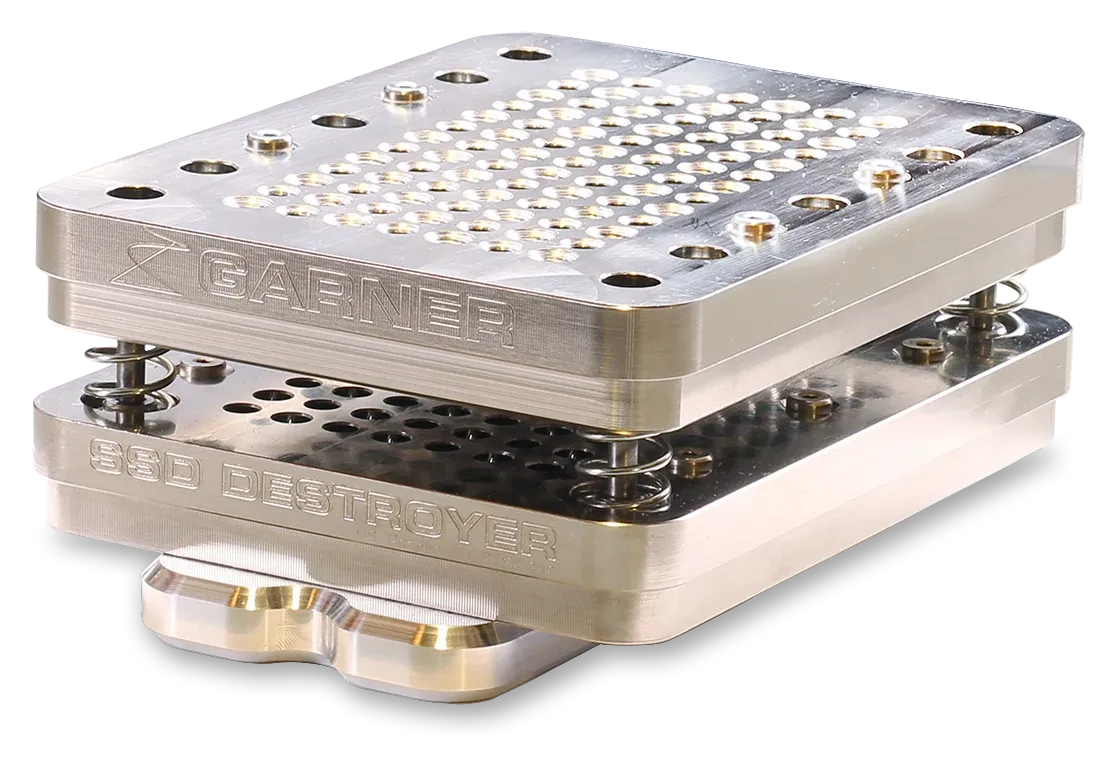
Insert with 90 spikes for the PD-5E. Punctures the memory chips of SSDs, USB sticks and phones.
A specialist looks at your media, your volume and the standard you need to demonstrate.