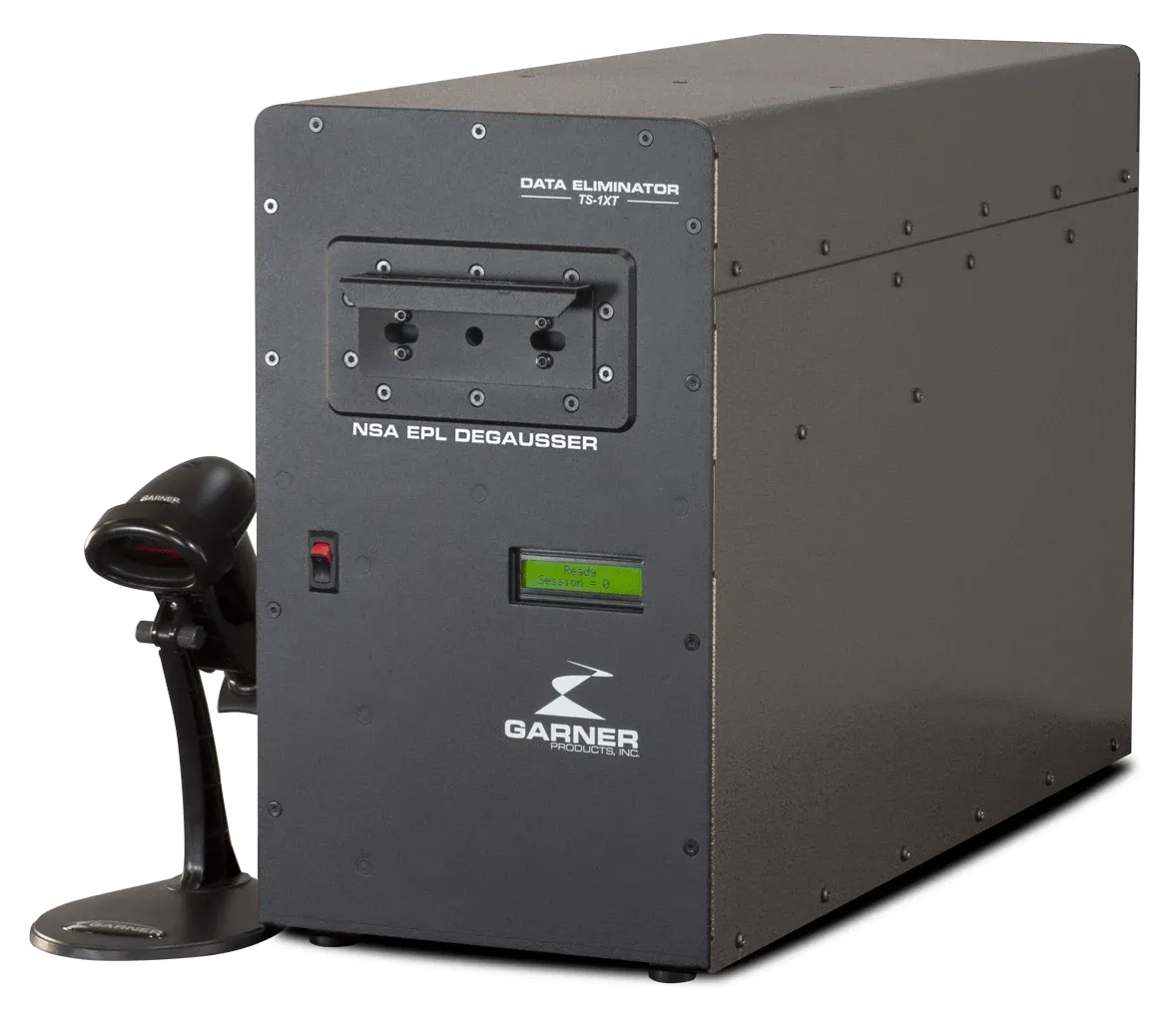
Garner TS-1XTE
NSA/CSS EPL-listedErases hard drives and tapes in 15 seconds. Includes SCAN-1X logging for every cycle.
- Field
- 2.0 T (20 000 G)
- Capacity
- 150 × 3.5″ per hour
from €23,950 excl. VAT
 DegaussersErase magnetic media with a strong magnetic field.5 models
 DestroyersPhysically deform hard drives and SSDs.2 models
 ShreddersShred flash memory, SSDs and small media.1 model
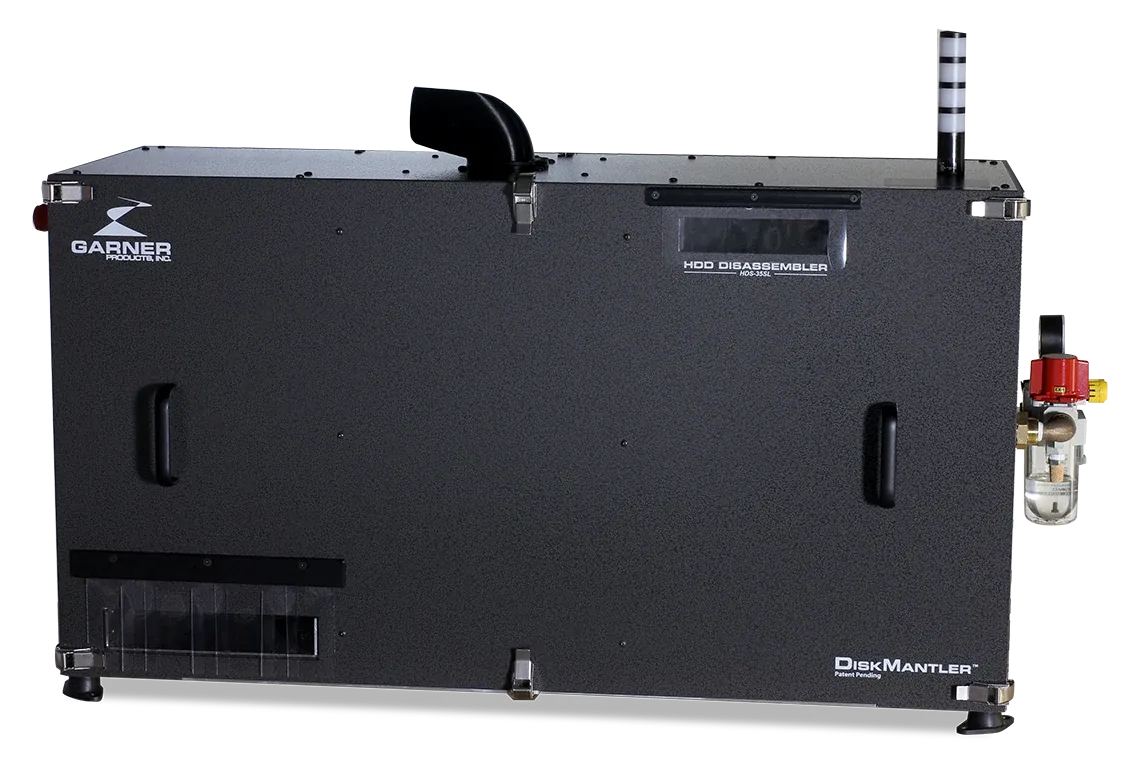 DiskMantlersDismantle hard drives into separate components.3 models
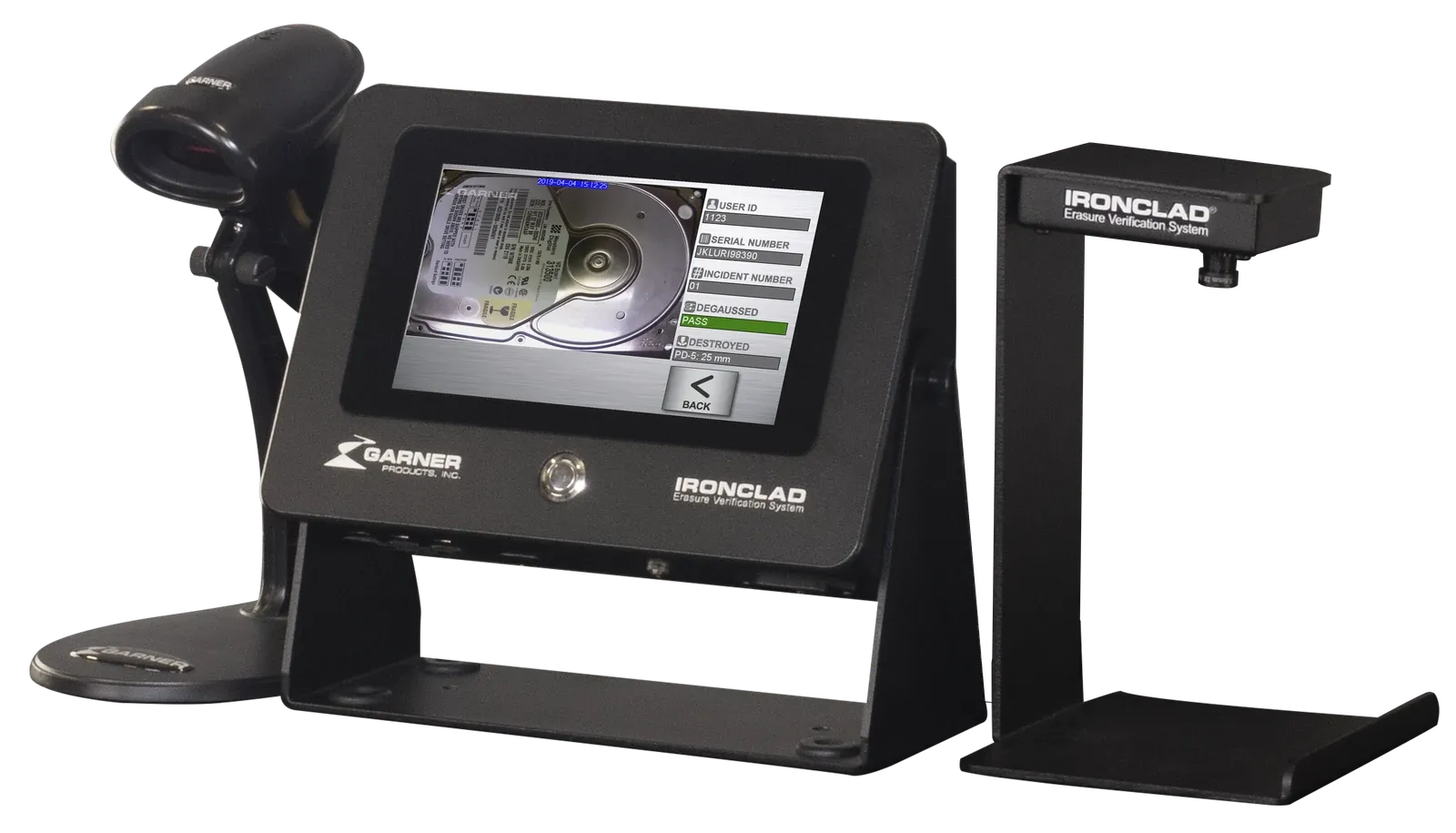 VerificationRecord and prove every erased or destroyed drive.1 model
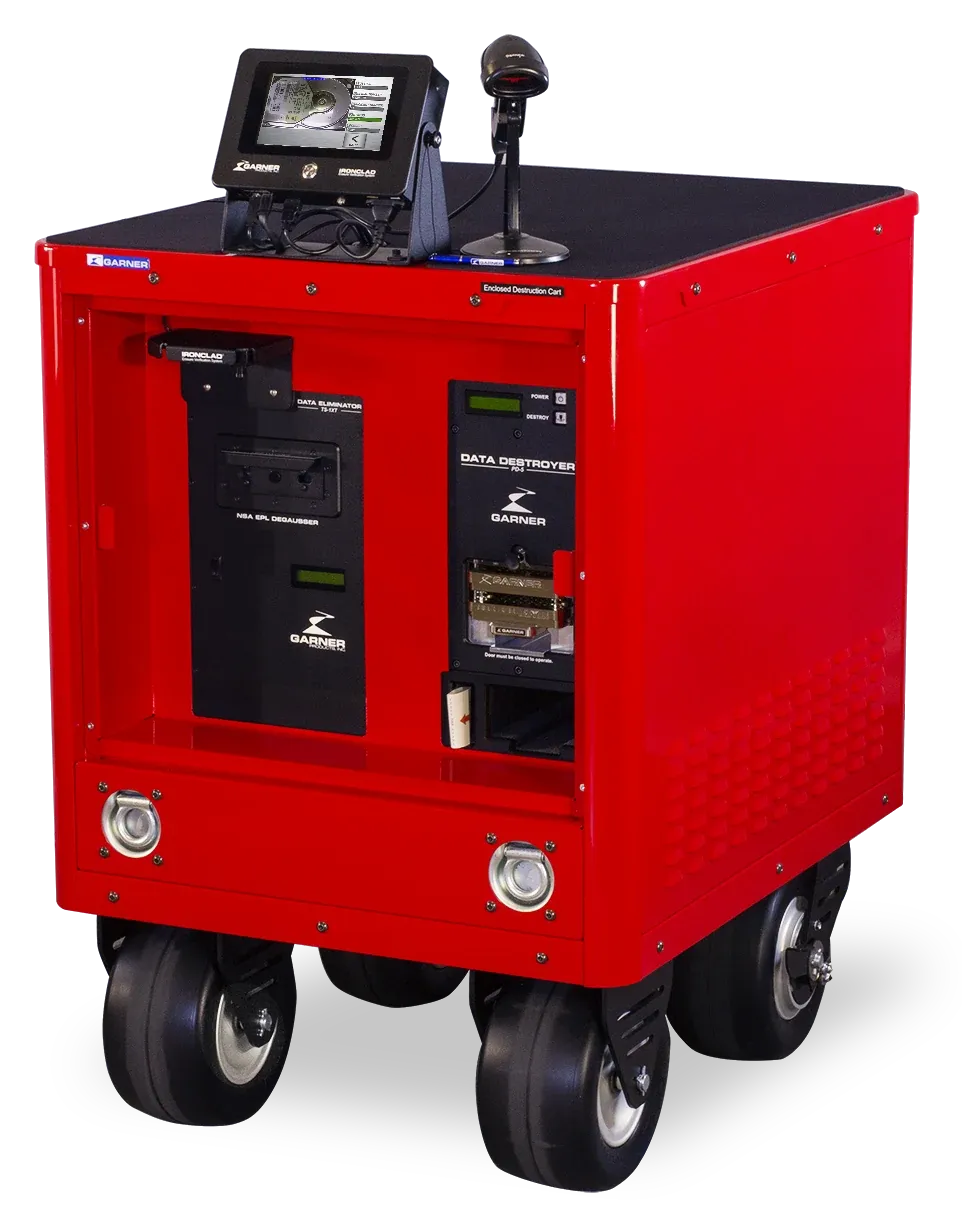 Packages and accessoriesCombined systems, carts, cases and workstations.6 models
Published 12 November 2026
What clear, purge and destroy mean under NIST 800-88 Rev. 2, how to match a method to each type of media, and how to verify and record the result.
Many policies and customer contracts refer to NIST 800-88. The guideline does not certify machines. It asks for decisions: which method for which media, who decides, and how you prove it. This article translates the three methods of NIST SP 800-88 Rev. 2 into practical steps for hard drives, tapes and SSDs.
NIST SP 800-88 helps organisations make data on storage media inaccessible before the media are reused, leave the organisation or are disposed of. In NIST terms, sanitisation means that access to the data is infeasible for a given level of recovery effort.
Revision 2 was published in September 2025. It puts more weight on an organisation-wide sanitisation programme: policy, roles, verification and documentation. For the technical details of each technique, it refers to other specifications, including IEEE 2883 and NSA/CSS specifications. The full text is available from NIST.
In practice, that means a machine alone is not the answer. You first need a policy that states which method applies to which media.
NIST distinguishes three methods:
Which method fits depends on three things: the type of media, the sensitivity of the data and what happens to the media afterwards.
Start with an inventory of the media you retire. The type of media limits the choice straight away.
Hard drives and tapes store data magnetically. A degausser can purge them. SSDs and flash memory store data in memory chips. A magnetic field has no effect on them, so degaussing is not an option. For them, physical destruction applies. Our article on why degaussing does not erase an SSD explains this in more detail.
Will the media be reused within your own organisation? Then clear can be enough, depending on the sensitivity of the data. Will they leave the organisation or be disposed of? Then your policy decides between purge and destroy.
Keep in mind that purging a hard drive by degaussing is not a route to reuse. The media remain physically intact, but a hard drive no longer works afterwards.
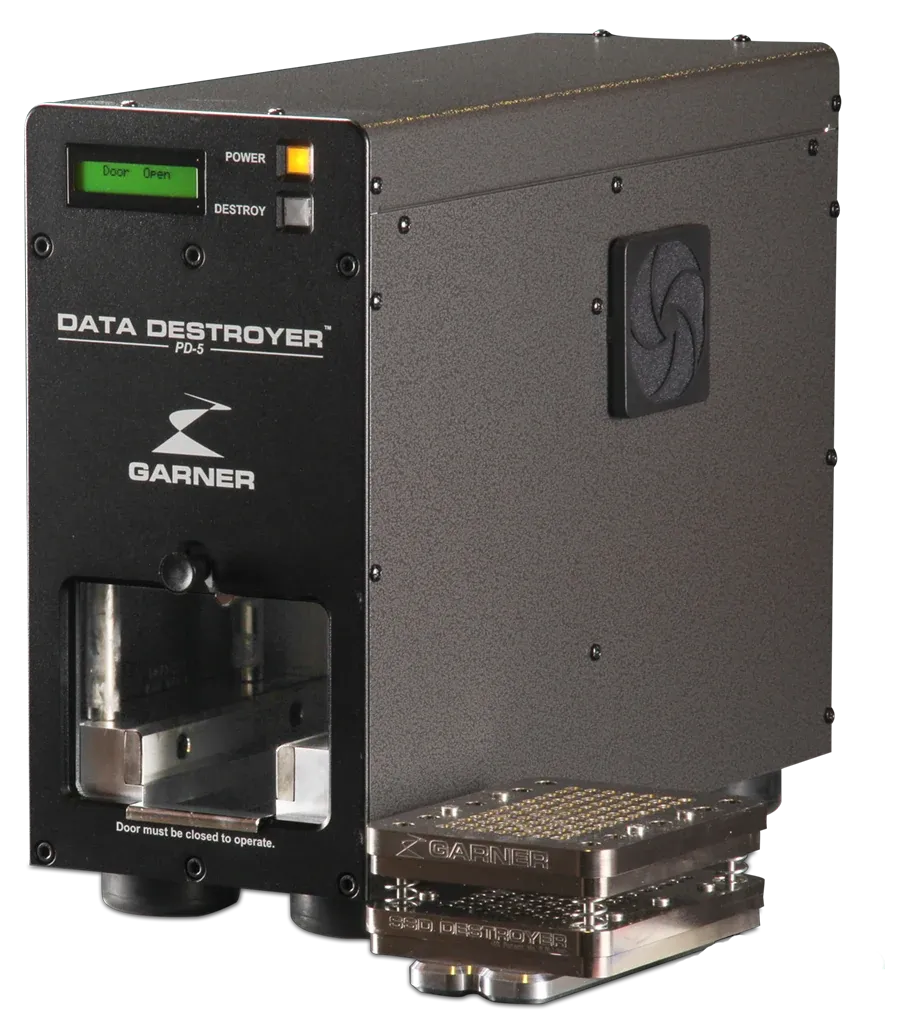
Hard drives. Purge with a degausser. The Garner TS-1XTE, for example, erases a drive or tape with a 2.0 T pulse in 15 seconds. If your policy requires destroy as well, a destroyer follows. The PD-5E presses a drive together with more than 10 tons of force in under 20 seconds. Garner recommends this order: degauss first, then deform.
Tapes. Purge with a degausser. A destroyer is not intended for magnetic tapes.
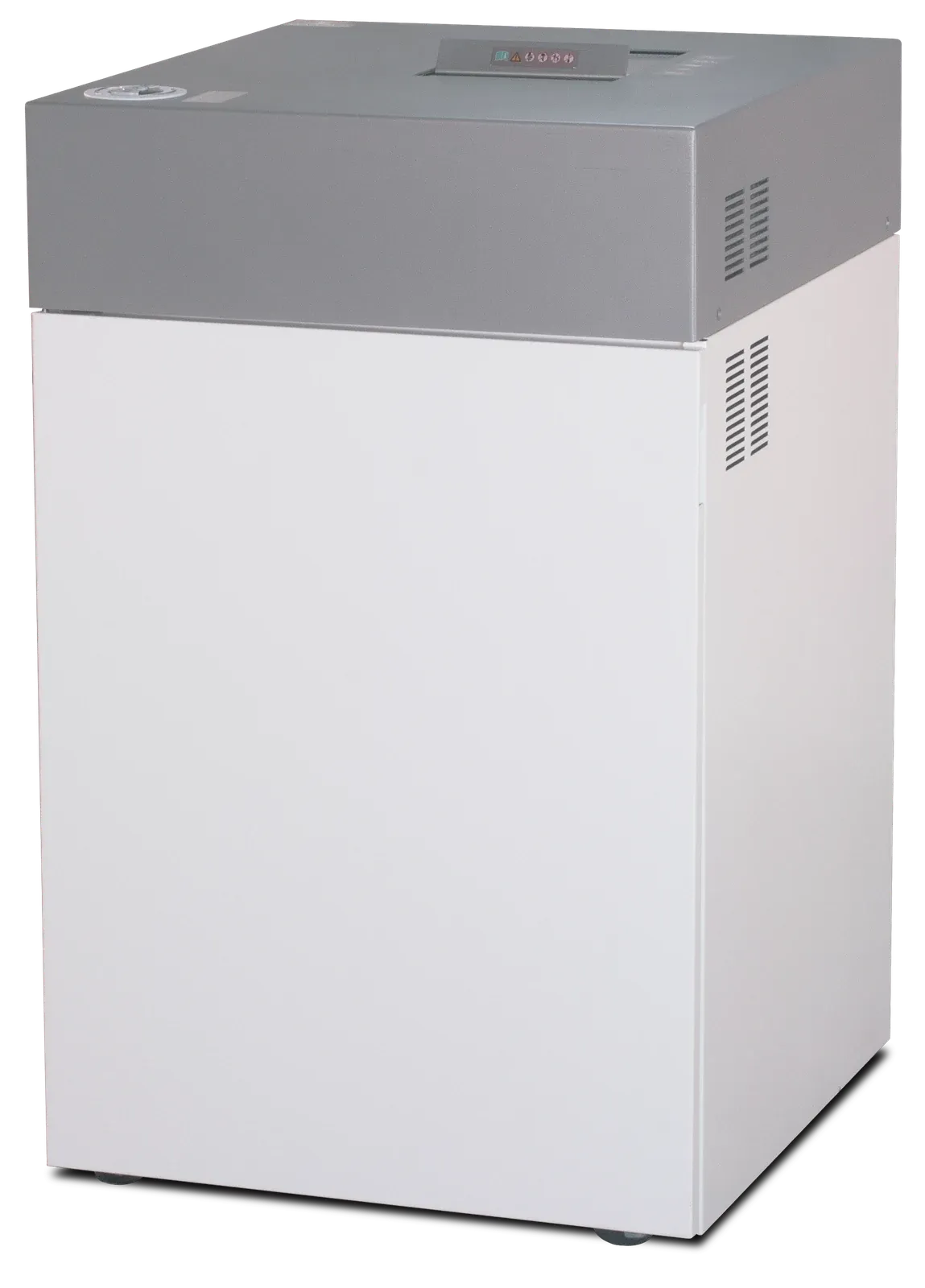
SSDs and flash media. Destroy. With the SSD-1E insert in the PD-5E, spikes puncture the memory chips. With the FLASHPRO-E shredder, media are cut into particles of 4 × 15 mm. If your policy also refers to ISO/IEC 21964 (formerly DIN 66399), a particle size may be required. Then a shredder is the route.
For classified media, NSA/CSS Policy Manual 9-12 sets its own rules. Of the Garner machines, the TS-1XT Series (supplied as the TS-1XTE) is listed on the NSA/CSS EPL for magnetic degaussers, and the PD-5 (supplied as the PD-5E) on the list for hard drive deformers.
Rev. 2 names verification and documentation as part of the programme. NIST asks you to verify and record the result.
The TS-1XTE logs every cycle with the supplied SCAN-1X software. IRONCLAD goes further. Per item, it records the serial or asset number, user and witness ID, date, time and location, the field strength or crush depth, and a photo. After each degauss cycle on a Garner degausser, it shows a green PASS or a red FAIL. From those records, it generates certificates of erasure and destruction, plus CSV and Excel files for your own administration or your customer’s audit.
A machine supports a method; it does not make a process meet NIST. Whether your process meets the guideline depends on your policy, your procedures and your records. Choose the machines after the policy, not before.
The right combination depends on your media, your volumes and the standard you need to demonstrate. Ask for personal advice or request a quotation directly.
Erases hard drives and tapes in 15 seconds. Includes SCAN-1X logging for every cycle.
from €23,950 excl. VAT
Bends and breaks hard drives with more than 10 tons of force in under 20 seconds. NSA/CSS EPL-listed.
from €11,500 excl. VAT
Photo, pass/fail result and certificate per drive. For Garner degaussers, destroyers and the FLASHPRO, or stand-alone.