NSA/CSS EPL-listed
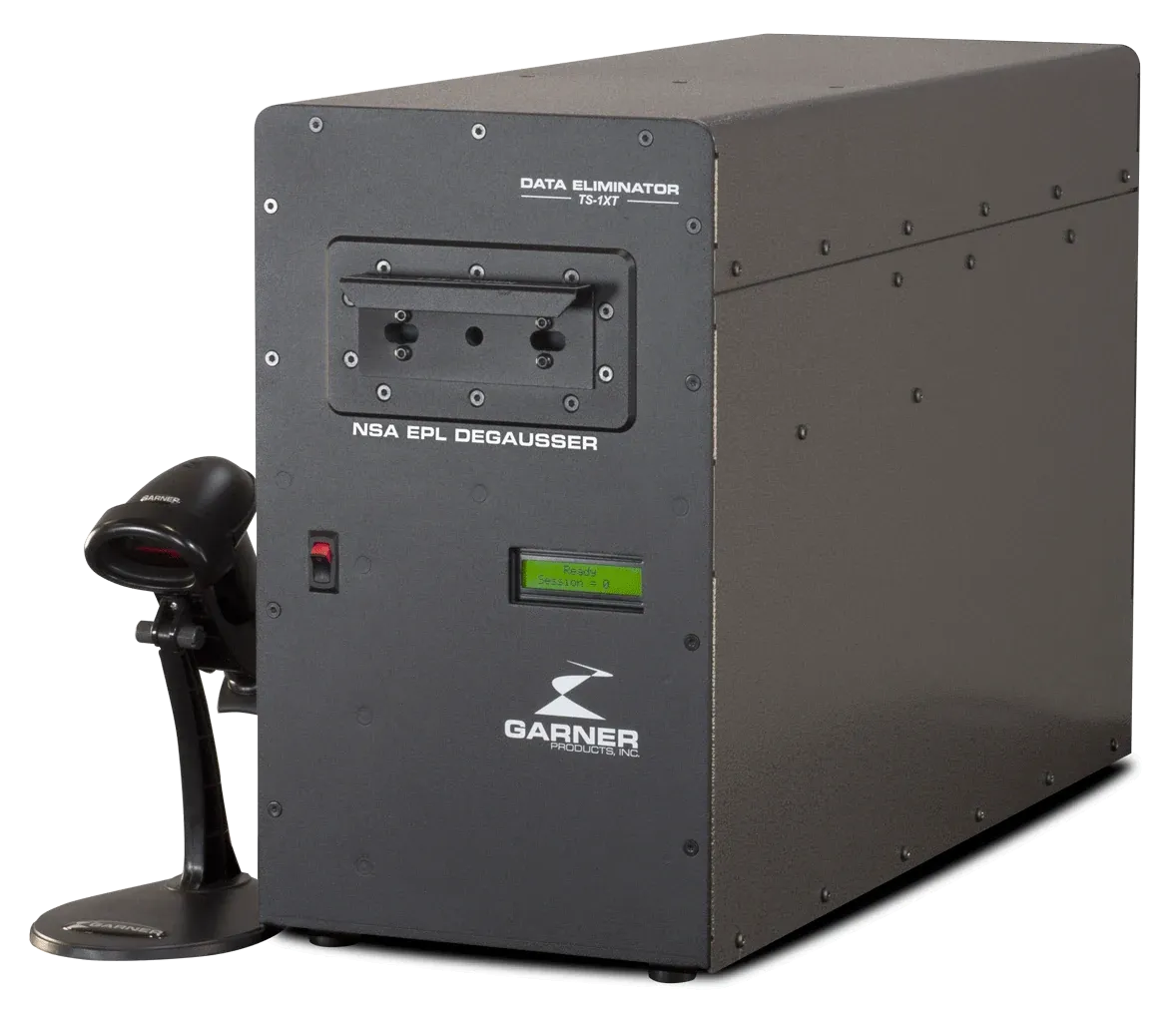
Garner TS-1XTE
Erases hard drives and tapes in 15 seconds. Includes SCAN-1X logging for every cycle.
- Field
- 2.0 T (20 000 G)
- Capacity
- 150 × 3.5″ per hour
 DegaussersErase magnetic media with a strong magnetic field.5 models
 DestroyersPhysically deform hard drives and SSDs.2 models
 ShreddersShred flash memory, SSDs and small media.1 model
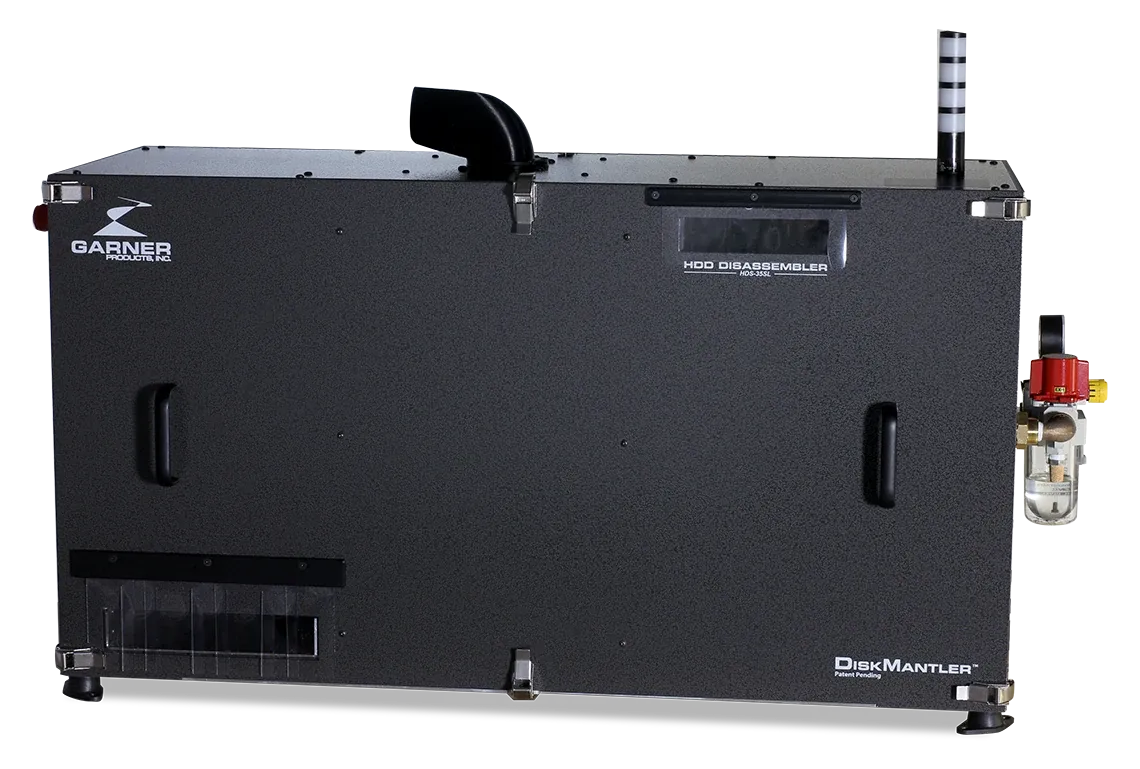 DiskMantlersDismantle hard drives into separate components.3 models
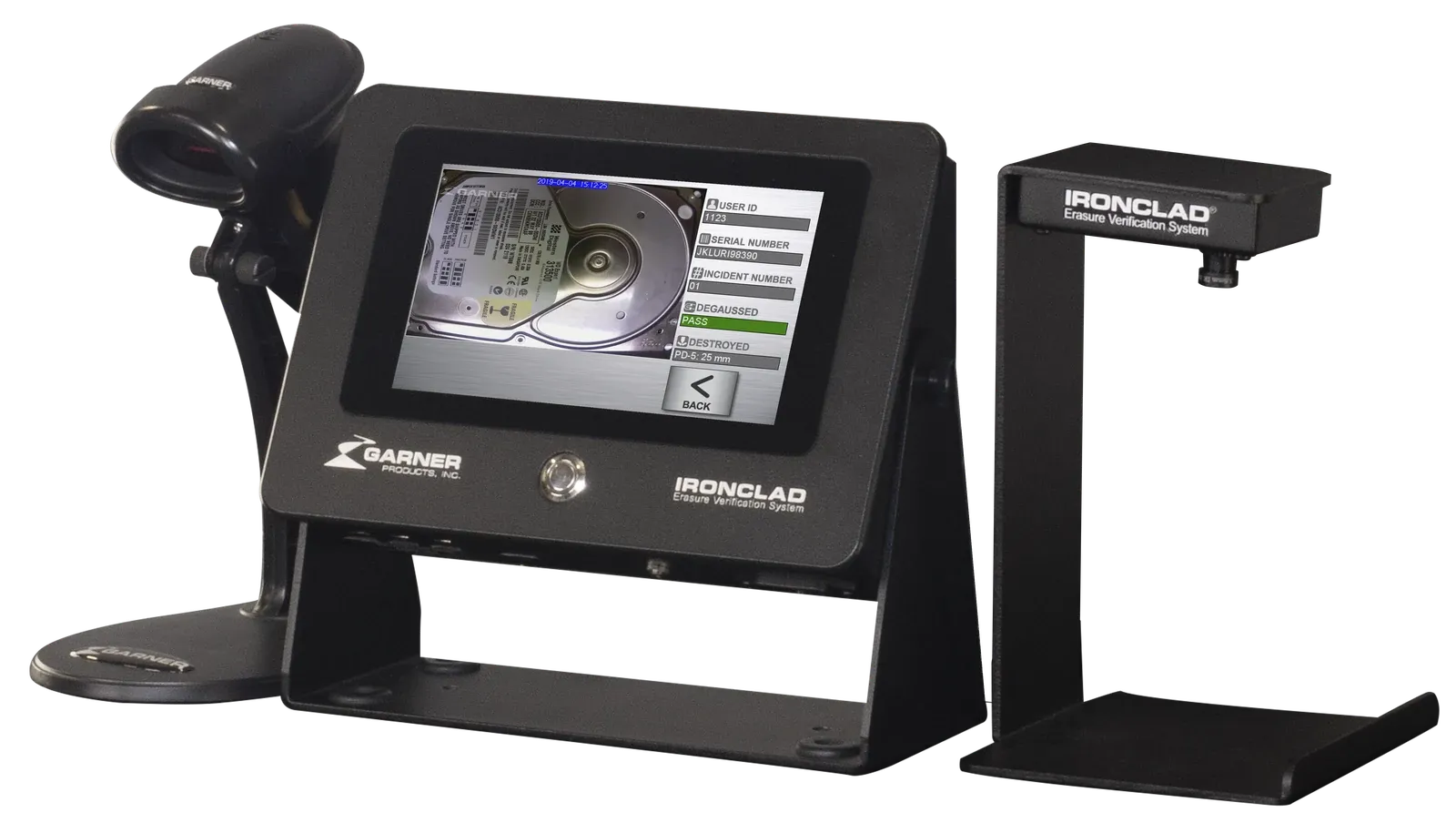 VerificationRecord and prove every erased or destroyed drive.1 model
Published 7 October 2026
A degausser erases magnetic media, a destroyer deforms them. Which method fits hard drives, tapes and SSDs, and why hard drives often need both.
Anyone who retires hard drives, tapes or SSDs soon faces the question: do we need a degausser or a destroyer? The two machines are often mentioned in the same breath, but they do different things. A degausser erases data with a magnetic field. A destroyer deforms the media physically. Which one you need depends above all on the type of data carrier.
A degausser erases hard drives and tapes with a strong magnetic field. Afterwards the data can no longer be read. A hard drive no longer works either, because degaussing also erases the servo information the drive needs to operate. The drive cannot be reused; it is waste afterwards.
In NIST SP 800-88 terms, degaussing magnetic media with a suitable degausser is a purge technique: it protects against laboratory recovery, while the media remain physically intact. The Garner TS-1XTE, for example, erases a drive or tape with a 2.0 T pulse in 15 seconds and logs every cycle with the supplied SCAN-1X software.
One limitation is fundamental: degaussing has no effect on SSDs and flash memory. They do not store data magnetically.
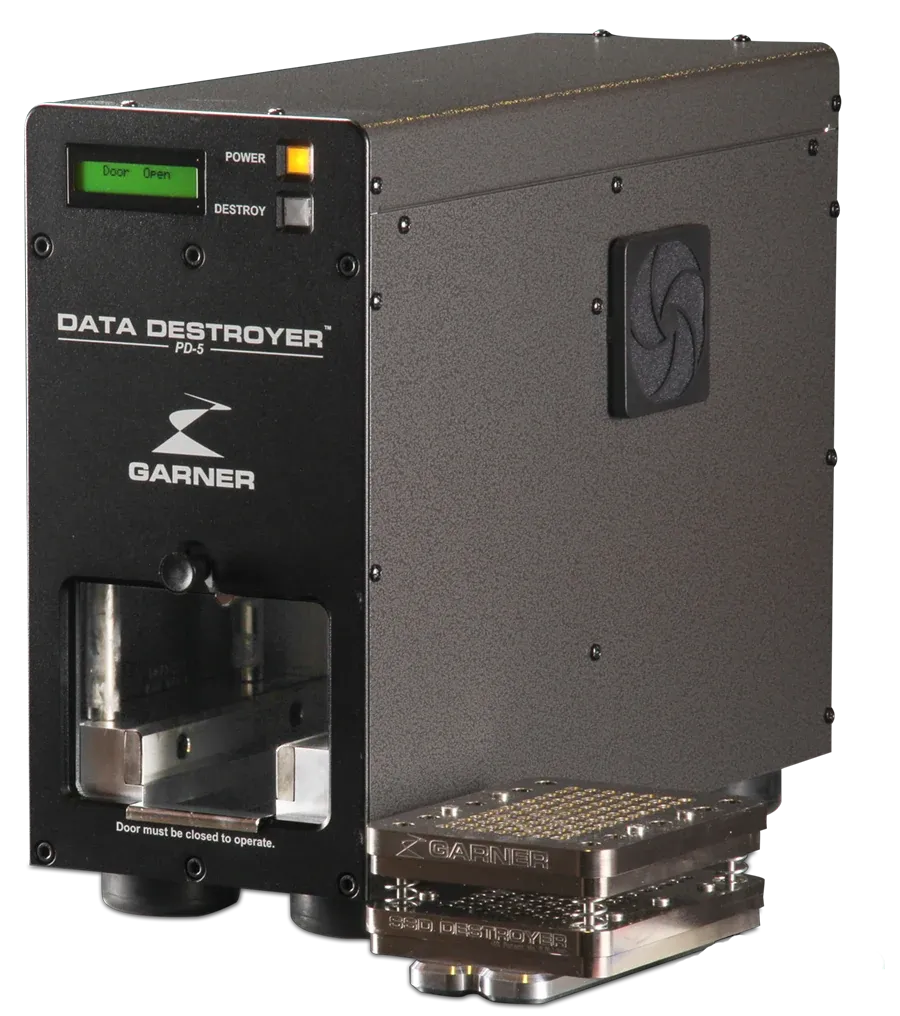
A destroyer makes a hard drive physically unusable. The Garner PD-5E presses a drive together with more than 10 tons of force in under 20 seconds: the platters bend, the housing cracks and the circuit board breaks. A bent platter can no longer spin or be mounted in a laboratory reader.
That is visible proof that a drive is out of use. But a bent drive that has not been degaussed still has data on the platter surface. A destroyer on its own is therefore not enough for hard drives.
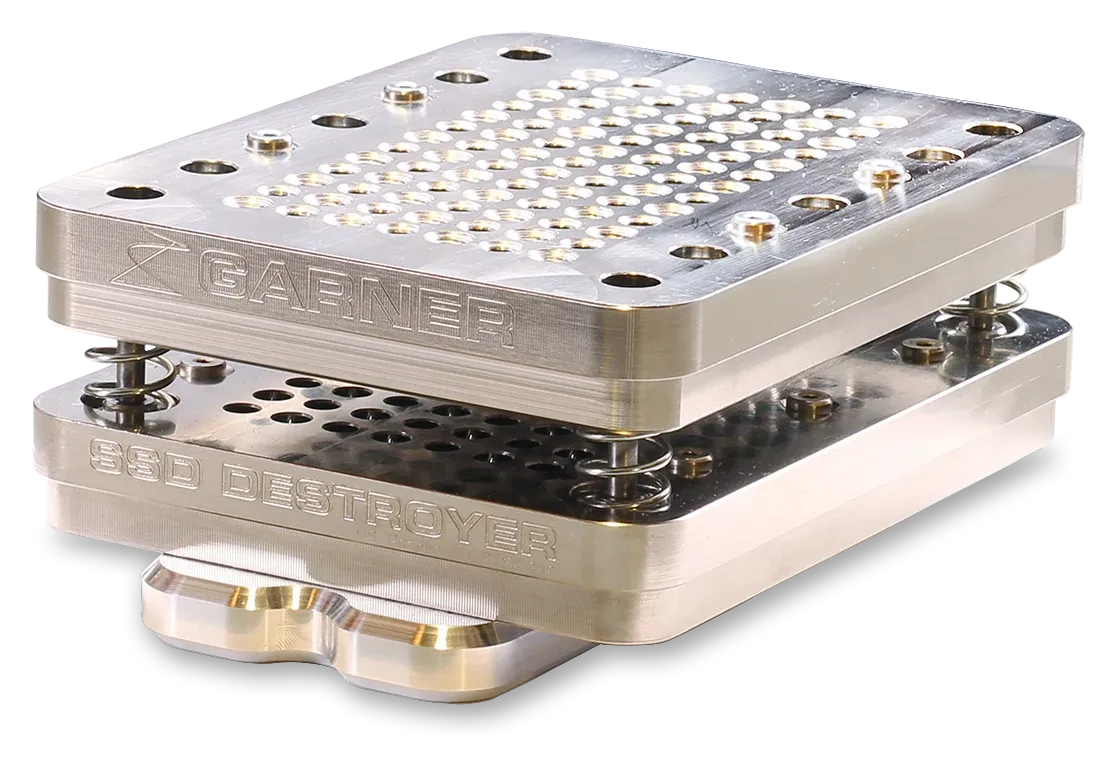
With the SSD-1E insert, the PD-5E also handles solid-state media: 90 spikes puncture the memory chips of SSDs, USB sticks, phones and SSHD controller boards.
Hard drives (HDD). Degauss first, then deform. Garner recommends this order. Degaussing removes the data; deforming makes the drive visibly and physically unusable.
Data tapes. A degausser erases tapes such as LTO, DLT and AIT. A destroyer is not intended for magnetic tapes.
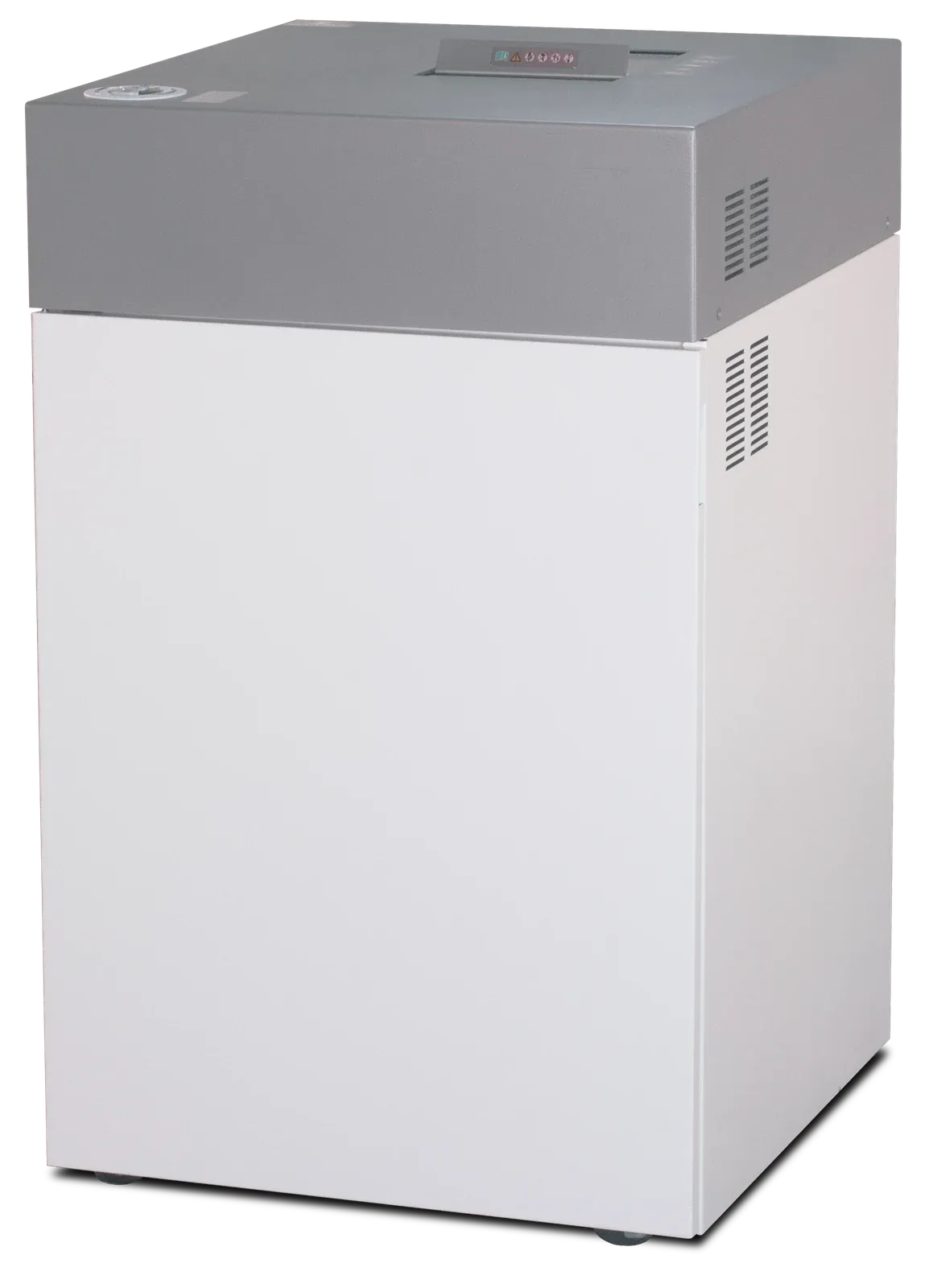
SSDs and flash media. Degaussing does not work. Physical destruction does: with the SSD-1E insert in the PD-5E, or with a shredder such as the FLASHPRO-E, which cuts media into particles of 4 × 15 mm. Some standards specify a particle size for solid-state media; then a shredder is the route.
Mixed fleets. Many organisations retire hard drives and SSDs together. Then you need two methods side by side, ideally with one record covering both.
For classified media, the order is not a choice. Under NSA/CSS Policy Manual 9-12, a regular magnetic hard drive is degaussed with a degausser on the NSA/CSS Evaluated Products List (EPL) and then deformed, for example with a listed deformer. A deformer on its own does not sanitise a hard drive.
Of the Garner machines, the TS-1XT Series (supplied as the TS-1XTE) is listed on the NSA/CSS EPL for magnetic degaussers, and the PD-5 (supplied as the PD-5E) on the list for hard drive deformers (edition October 2026). Together they cover the degauss-then-deform route. For SSDs, the NSA requires disintegration to 2 mm or less with a device from the solid-state list.
Outside the classified domain, many organisations work with NIST SP 800-88 Rev. 2 or ISO/IEC 21964 (formerly DIN 66399). Which method fits depends on the media, the sensitivity of the data and what happens to the media afterwards.
Because hard drives often need both steps, Garner offers degauss-and-destroy packages that combine a degausser with the PD-5E, with or without the SSD-1E insert. The Enclosed Destruction Cart puts both machines on one wheeled cart.
Erasing and destroying is one half; proving it is the other. NIST also asks you to verify and record the result. IRONCLAD records per drive the serial number, operator, date and time, field strength or crush depth, and a photo, and generates certificates of erasure and destruction.
The right choice depends on your media, your volumes and the standard you need to demonstrate. Ask for personal advice or request a quotation directly.
Erases hard drives and tapes in 15 seconds. Includes SCAN-1X logging for every cycle.
Bends and breaks hard drives with more than 10 tons of force in under 20 seconds. NSA/CSS EPL-listed.
Insert with 90 spikes for the PD-5E. Punctures the memory chips of SSDs, USB sticks and phones.